NRA Rules for Safe Firearm Handling
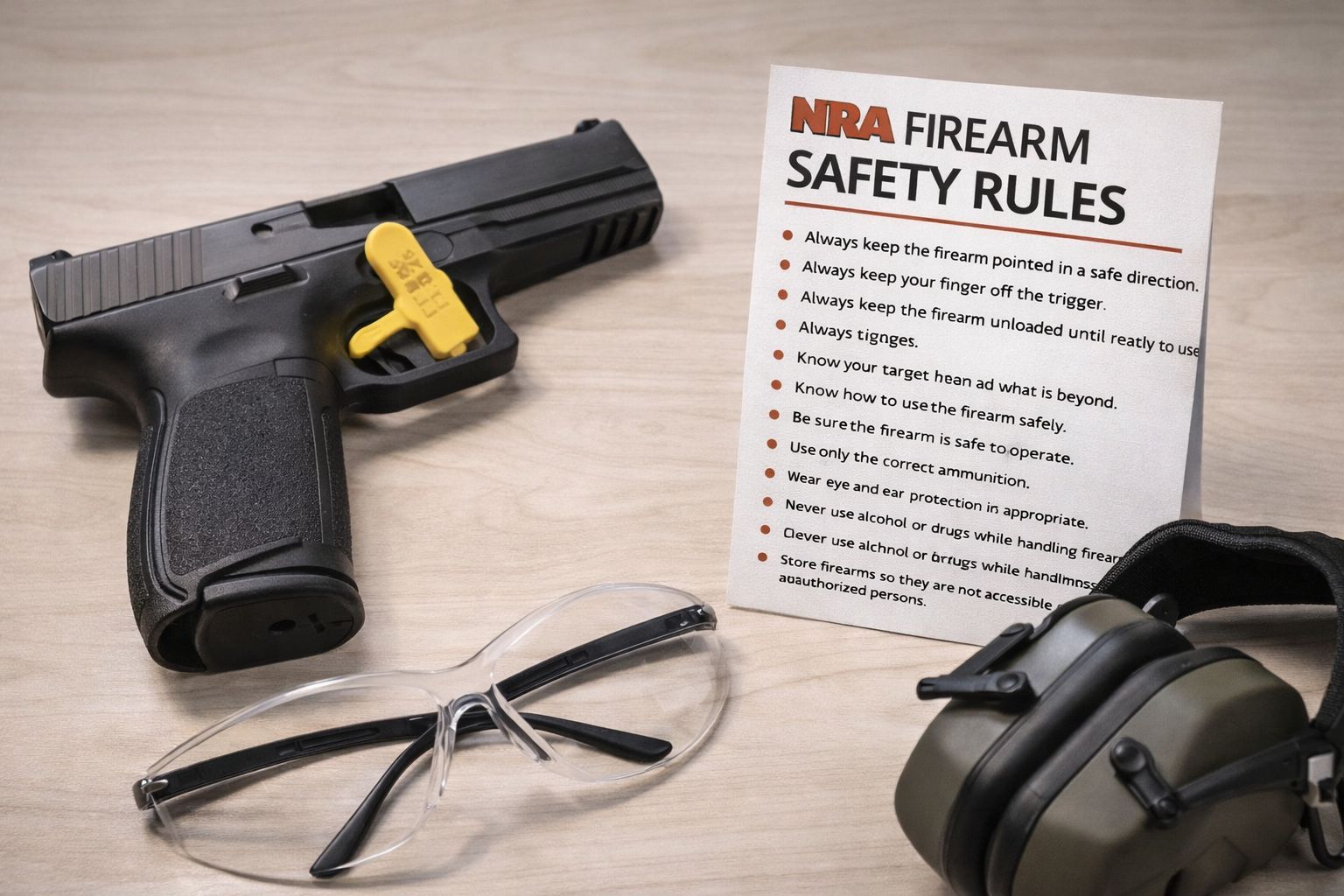 Safety is the foremost priority when handling firearms. Following the NRA’s firearm safety rules promotes responsible ownership, safe operation, and accident prevention. These rules apply to all experience levels and should be practiced at all times.
The NRA Rules for Safe Firearm Handling
| 1. | Always keep the firearm pointed in a safe direction. |
| Control where the muzzle is pointed at all times. A safe direction means that even if the firearm were to discharge, no injury or damage would occur. | |
| 2. | Always keep your finger off the trigger until you are ready to shoot. |
| Keep your finger indexed along the frame until your sights are on target and you have made the decision to fire. | |
| 3. | Always keep the firearm unloaded until ready to use. |
| Immediately verify the firearm’s condition when handling it. Remove the magazine, open the action, and visually and physically check the chamber. Personal protection and home defense constitute a lawful “use.” | |
Additional NRA Safety Rules
| 4. | Know your target and what is beyond. |
| Be certain of your target and what lies beyond it. Firearms projectiles can penetrate walls, trees, and other barriers. | |
| 5. | Know how to use the firearm safely. |
| Read the owner’s manual and understand how your firearm operates. Mechanical safeties are not substitutes for safe handling. | |
| 6. | Ensure the firearm is safe to operate. |
| Firearms require regular inspection, cleaning, and proper maintenance. If a firearm does not function correctly, consult a qualified gunsmith. | |
| 7. | Use only the correct ammunition. |
| Use ammunition specifically designed for your firearm. The correct caliber or gauge is typically marked on the barrel. | |
| 8. | Wear eye and ear protection as appropriate. |
| Hearing and eye protection reduce the risk of injury from noise, debris, and gas emissions. | |
| 9. | Never use alcohol or impairing substances. |
| Never handle or use firearms while under the influence of alcohol, prescription medication, or other substances that impair judgment. | |
| 10. | Store firearms securely. |
| Store firearms so they are inaccessible to unauthorized users. Use locking devices and follow safe storage practices appropriate to your household. | |
Firearm Maintenance Guide
Regular cleaning and maintenance are essential for safe and reliable firearm operation. Proper care extends service life, preserves value, and reduces the likelihood of malfunctions.
Firearms should be cleaned after use and before firing if they have been stored for an extended period. Moisture, debris, and degraded lubricants can affect function.
Before performing maintenance:
- Verify the firearm is unloaded
- Open the action
- Remove all ammunition from the workspace
A Note About Accidental and Negligent Discharges
The vast majority of unintentional discharges are the result of user error and are more accurately described as negligent discharges. Common contributing factors include failure to follow safety rules, improper maintenance, or incorrect handling.
True mechanical malfunctions are rare but possible. Firearm safeties are mechanical devices and can fail — reinforcing why adherence to safety rules is always essential.